A repair may be enough when the surrounding roof is still sound.
A localized problem may be repairable without replacing the whole roof. Replacement becomes more reasonable when damage or deterioration is widespread, or when a targeted repair cannot leave the remaining roofing system serviceable. An inspection should establish the extent of the problem before either option is recommended.
A leak calls for an inspection, not an automatic reroof. For a North Texas homeowner comparing estimates, the useful question is: what work addresses the actual problem, and what condition will the rest of the roof be left in?
When is roof repair enough, and when is replacement worth considering?
The location and extent of the damage matter more than the label on the estimate. A repair targets a particular defect. A replacement addresses a larger roofing scope. GAF's repair-versus-replacement guidance makes the same distinction between localized damage and widespread problems.
A targeted repair may fit
- The problem is confined to a repairable area or component.
- The surrounding roofing remains in serviceable condition.
- The proposed work addresses the cause, not only the visible symptom.
A replacement may fit
- Damage or deterioration affects multiple areas.
- Existing wear makes localized work impractical.
- The remaining roof would still need substantial work after a repair.
Use this comparison to discuss the inspection findings—not as a substitute for an assessment of your roof.
How should roof age, recurring leaks and shingle condition influence the decision?
Age is context, not a stand-alone verdict.
An older roof deserves a careful condition check, but its age alone does not establish that it needs replacement. Missing, cracked or curled shingles, flashing damage and visible sagging are reasons to seek an inspection. GAF identifies these as warning signs, while noting that age does not always mean a new roof is needed.
Ask whether repeated leaks share the same cause.
Give the contractor any previous repair records and explain whether water has returned in the same place or appeared elsewhere. Ask what the inspection shows about the leak source and the areas around it. A history of repairs is useful evidence to review; it is not, by itself, a diagnosis of the whole roof.
Include the roofing that will remain.
For a proposed shingle repair, ask whether the adjacent shingles and flashing can be worked with without leaving another weak point. An estimate should explain both the defect being corrected and any important limitations of the surrounding roof.
Can you repair part of a roof, and will the shingles match?
A partial repair can be appropriate when the affected area is localized and the rest of the roof remains serviceable. Before approval, ask how the repair will join the existing shingles, underlayment and flashing, and whether compatible materials are available.
Appearance is a separate consideration. Existing shingles can weather and change color, so new material may not blend perfectly. GAF's shingle-matching guidance explains why identifying the actual product and color information is more reliable than choosing by eye. Ask to see the proposed match and understand any visible difference before work starts.
Ask two separate questions: can the proposed repair be installed correctly, and what will it look like? A close color match is not a substitute for a compatible repair.
Do hail damage or rotten decking automatically mean full roof replacement?
No. The scope should follow the findings. Hail or wind damage is one factor to evaluate alongside the condition of the remaining roofing. For storm-specific signs and next steps, see our North Texas hail-damage guide and storm-damage roofing service.
Decking is a different part of the decision. Some deterioration is not exposed until the old roofing is removed; GAF's decking guidance explains that hidden damage can change a reroof estimate. Unsound decking needs attention before new roofing is installed, but one damaged area does not establish that every sheet needs replacing. Our rotten roof decking guide covers that process in detail.
What should you compare in repair and replacement estimates?
Compare what each proposal includes, excludes and leaves in place. A lower total does not answer whether two contractors are proposing the same work. These questions make the difference easier to understand:
- What did the inspection find?Ask for photos, the affected locations and an explanation of the proposed solution.
- What will be repaired or replaced?Check the material, repair area, flashing details, tear-off, disposal and cleanup included in each written scope.
- What condition will the rest of the roof be in?Ask about existing wear, likely follow-up work, appearance and the limits of any repair or workmanship warranty.
- How will hidden damage be handled?Ask how decking or framing discoveries will be documented, priced and approved before additional work proceeds.
Where both approaches are practical, ask for a written comparison. You do not need to select a replacement simply because it is the larger option—or accept a patch without understanding what it will leave unresolved.
The roofing scope and the coverage decision are different.
American Roofing can document visible conditions and explain the construction work. Your insurer determines coverage under your policy. The Texas Department of Insurance notes that age or ordinary wear alone does not entitle a homeowner to a new roof. TDI also prohibits a contractor from acting as the public adjuster on a claim when also doing the work.
Contractor-side claim assistance →What do our Sherman and Pottsboro projects show?
These are completed replacement projects, not examples of every roof needing replacement. They show why the work discovered during tear-off must be distinguished from the condition visible beforehand.
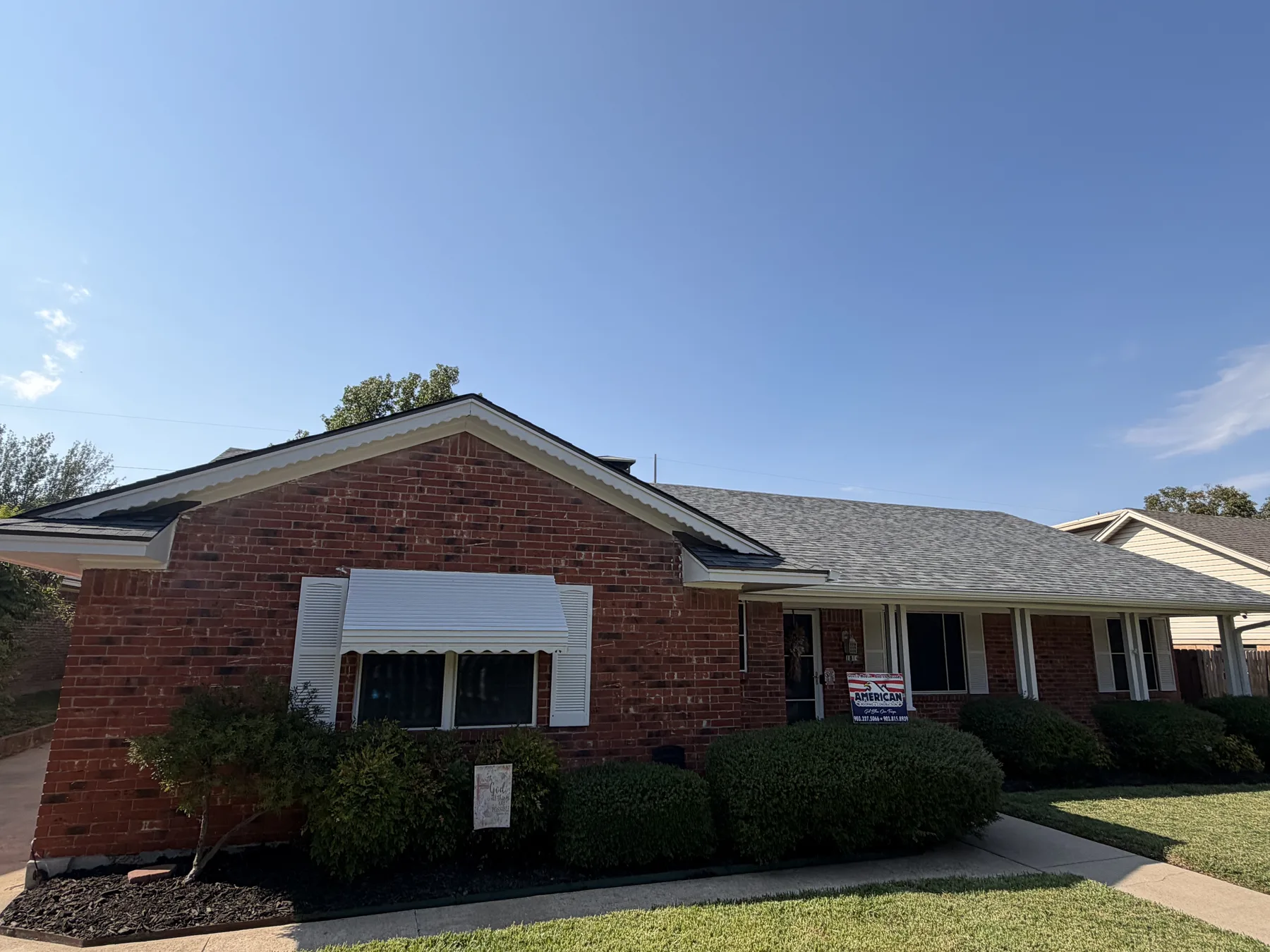
Water-damaged plywood found after tear-off.
The crew removed the roofing and three layers of felt during an insurance-claim reroof. Water-damaged plywood was repaired before Owens Corning TruDefinition Duration shingles in Estate Gray were installed. New seamless gutters and downspouts followed.
See the Sherman project →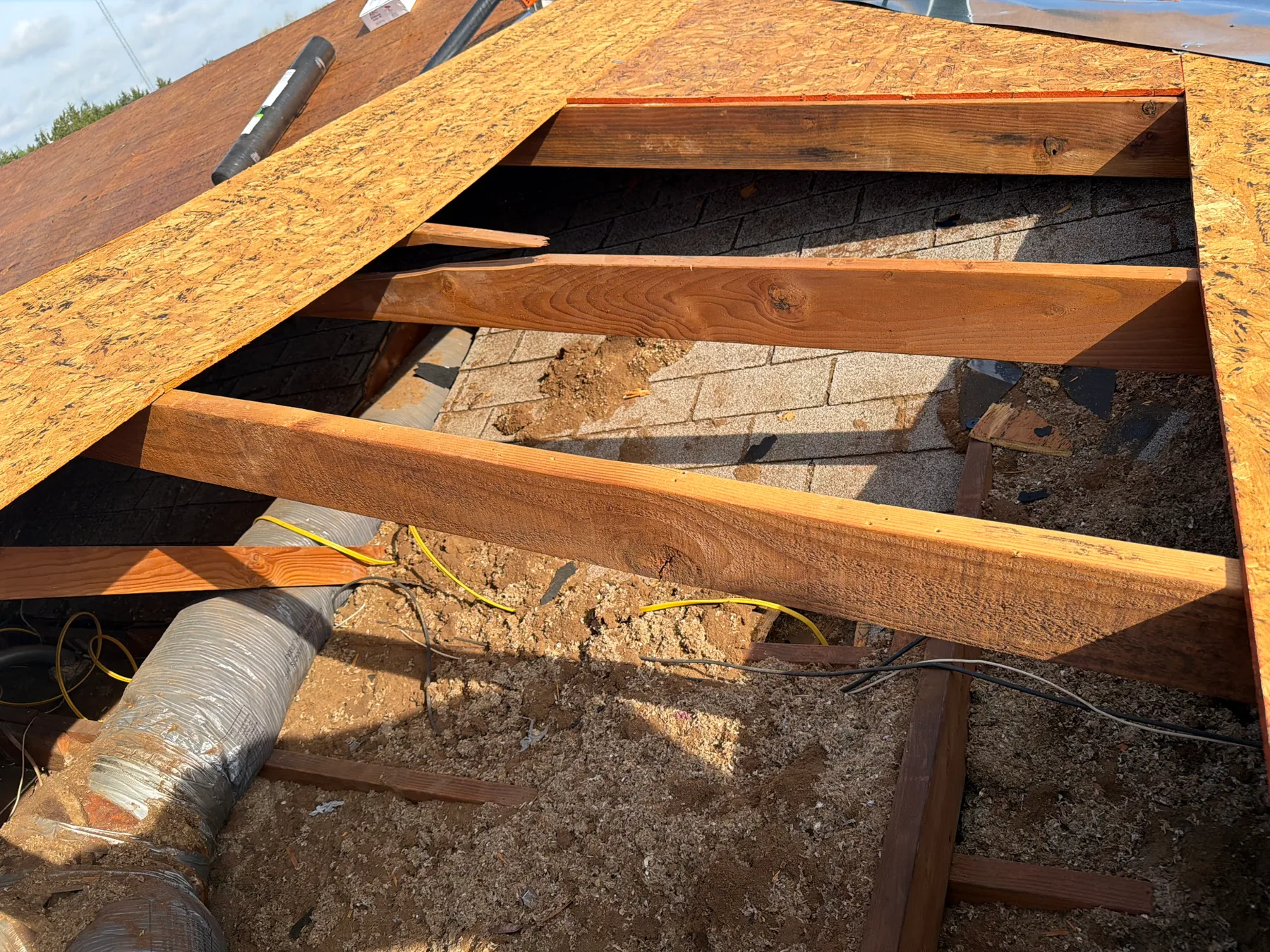
Soft areas led to a closer look at the framing.
Removing the old shingles and felt exposed rotten decking and broken rafters. American Roofing corrected those conditions before installing the new roofing system. The documented roofing work took one day; gutters were installed separately afterward.
See the Pottsboro project →For other documented systems, compare the Denison shingle roof replacement and Tom Bean metal-roof restoration. The material and actual project scope matter; none of these examples establishes what your own roof needs.
Common roof repair-versus-replacement questions.
How much damage is too much to repair?
A percentage alone is not enough to choose the scope. Ask where the damage is, which components are affected and whether the remaining system can support a compatible repair. Any applicable local requirements and manufacturer instructions also need to be checked for the proposed work.
How long will a roof repair last?
There is no reliable fixed lifespan to promise without assessing the roof and the proposed work. Ask what the repair corrects, what remains untouched and what warranty applies. A repair warranty should not be mistaken for a guarantee of the entire existing roof.
Should I wait for a leak before requesting an inspection?
No. Visible damage, storm concerns or uncertainty about an older roof are enough reasons to arrange an assessment. American Roofing offers free roof inspections with documentation of visible concerns and recommended next steps.
Manufacturer guidance and Texas insurance resources.
General guidance draws on the sources below. Local project facts and photographs come from American Roofing & Construction's linked project records. This article does not replace an on-site assessment or a review of your policy.
Get the roof assessed before choosing the scope.
Bring your questions, previous repair records and any estimates you are comparing. American Roofing & Construction serves Sherman, Denison and communities across its North Texas and Texoma service area.
Planning a replacement? See how long roof replacement can take, including scheduling, installation and separate gutter work.
Request a Free Inspection