Hail damage can affect a roof even when there is no obvious leak.
On asphalt shingles, hail can create dents, displaced granules, tears or cracks. On metal roofing, hail commonly leaves dents, but a dent alone does not automatically mean the roof has lost function. The safest next step after a significant storm is a roof inspection that looks at the entire system and documents what is actually damaged.
North Texas homeowners deal with hail often enough that it is easy to assume you will know roof damage when you see it. In reality, some storm damage is obvious from the ground and some is not. The condition of the roof before the storm, roofing material, hail size and hardness, wind, impact angle and where the hail strikes all influence what happens.
What does hail damage look like on a roof?
Hail damage does not look exactly the same on every roof. The visible signs depend on the roofing material and the force of the impact. A professional inspection should look for consistent impact patterns and damage to the roofing system, not treat every dark mark or dent as proof of a failed roof.
Common impact signs
- Dents or depressions in the shingle surface.
- Granules displaced around an impact point.
- Tears, cracks or ruptures in the shingle.
- Damage concentrated on exposed slopes and roof components.
IBHS research identifies dents, granule loss and tears or breaches as key hail-damage modes for asphalt shingles.
Dents need context
- Visible dimpling or dents in panels.
- Impact around ribs, seams and shaped portions of the panel.
- Possible damage to coatings, trim or adjacent exterior components.
- Gutters and downspouts may show impact from the same storm.
IBHS notes that hail can dent metal roofing and that visible denting is not, by itself, evidence that the roof has lost function. The roof still needs to be evaluated as a system.
Can hail damage gutters, screens and other exterior components too?
Yes. A hailstorm can affect more than the roof covering. On American Roofing projects in Denison and Tom Bean, the storm scope included damage to gutters, downspouts or other exterior items in addition to the roofing system.
Can a roof have hail damage that you cannot see from the ground?
Yes. A roof can have impact damage without an obvious missing shingle, hole or active leak visible from the yard. Roof slope, height, lighting and the type of damage all affect what can be seen from below.
If it is safe to do so, you can look for easier-to-see clues such as dented gutters, damaged downspouts, torn window screens, loose exterior components or debris from the storm. Those clues do not prove the roof needs replacement, but they can justify a closer inspection.
How big does hail have to be to damage a roof?
There is no single hail size that guarantees roof damage. Hail diameter matters, but so do hardness, mass, speed, wind, impact angle, roofing material, product condition and age. That is why two homes in the same neighborhood can come through the same storm differently.
Laboratory standards such as UL 2218 use controlled impact testing to classify impact-resistant roofing products. Those ratings are useful for comparing products, but they are not a promise that a roof will be damage-free in every real storm.
What should you do after a North Texas hailstorm?
The first goal is to protect the property and document what happened. The Texas Department of Insurance recommends documenting storm damage, preventing additional damage when possible, saving receipts for temporary repairs and understanding your policy before assuming what insurance will pay.
- Stay safe.Do not climb onto a slick or damaged roof.
- Document visible damage.Take photos or video of accessible exterior and interior damage.
- Prevent additional damage.If there is an opening or active leak, temporary protection may be appropriate when it can be done safely.
- Schedule a roof inspection.Have the roofing system checked before deciding whether the right scope is repair, replacement or no roofing work at all.
- Review your insurance policy.Coverage, deductibles and payment methods vary by policy and roof condition.
Your roofer and your insurance company have different jobs.
American Roofing & Construction can inspect the property, document visible roofing conditions, explain the contractor scope, provide an estimate and meet with an adjuster when requested. The insurance carrier determines coverage. Texas rules do not allow a contractor performing the work to act as the policyholder's public insurance adjuster on that same claim.
See our contractor-side insurance claim assistance →Does hail damage always mean the roof needs to be replaced?
No. Hail damage does not automatically mean full replacement. A targeted repair can make sense when the damage is localized and the surrounding roofing system remains serviceable. Replacement may make more sense when damage is widespread, the roof is already near the end of its useful life, repair would leave the system unreliable, or the approved scope calls for a full reroof.
Repair may make sense when
- Damage is limited to a repairable area.
- The surrounding roof is still in serviceable condition.
- Flashing or a specific component is the actual problem.
- The repair can restore the roof without creating a larger issue.
Replacement may make sense when
- Damage is widespread across the roofing system.
- Multiple components were affected by the storm.
- Age and existing wear make a localized repair impractical.
- The roof needs to be rebuilt from the deck up to complete the scope correctly.
The inspection should come before the conclusion. That is why American Roofing's service pages start with the condition of the roof rather than a preset answer.
Real hail-damage roofing projects in North Texas.
These are actual American Roofing & Construction projects with the city, roofing system and completed scope documented on the project pages.
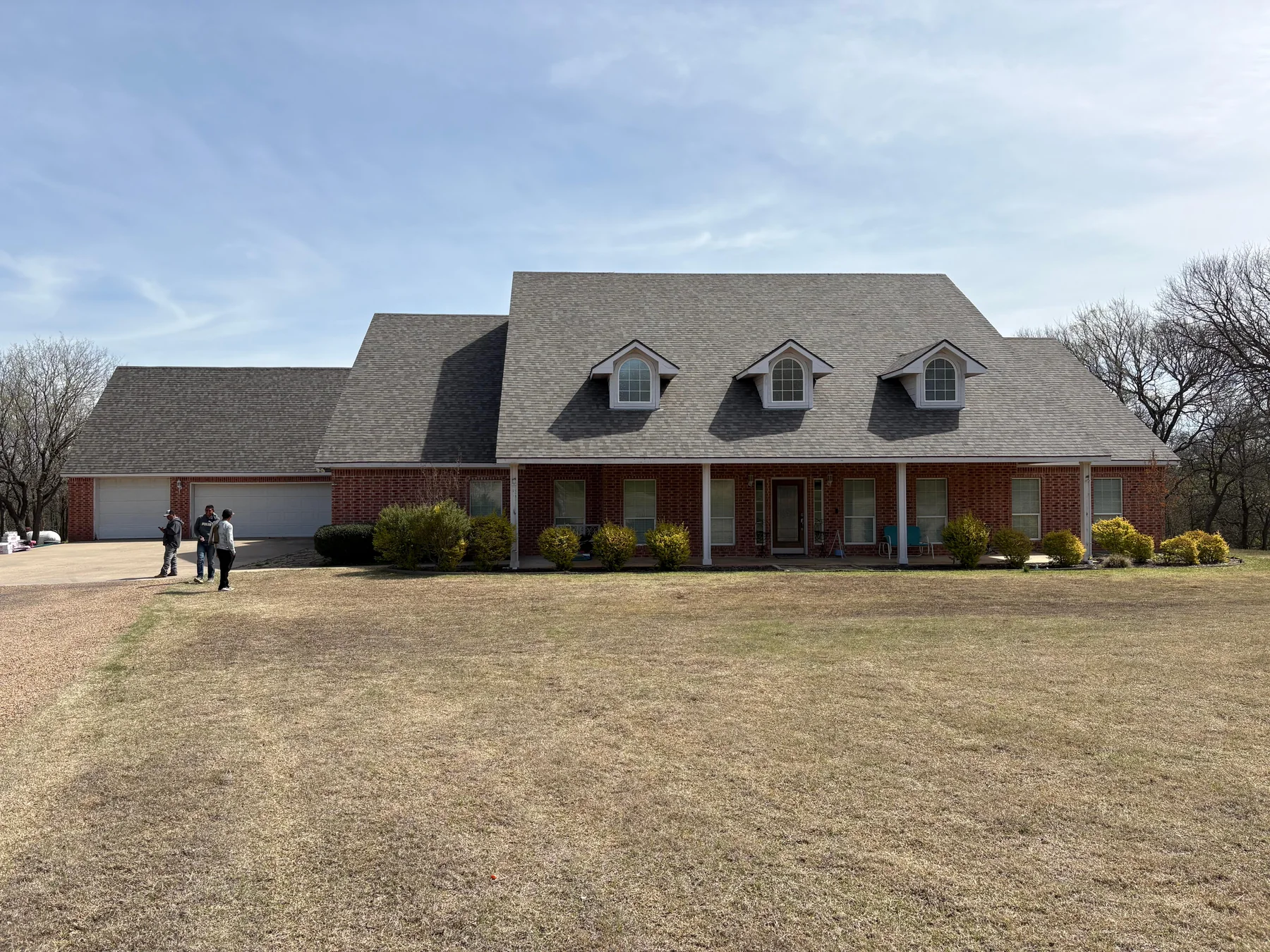
Hail-damage shingle roof replacement
A hailstorm damaged the roof, gutters and downspouts. The completed two-day project included new synthetic underlayment, ice-and-water protection, Owens Corning shingles in Driftwood, and new seamless gutters and downspouts.
View the Denison project →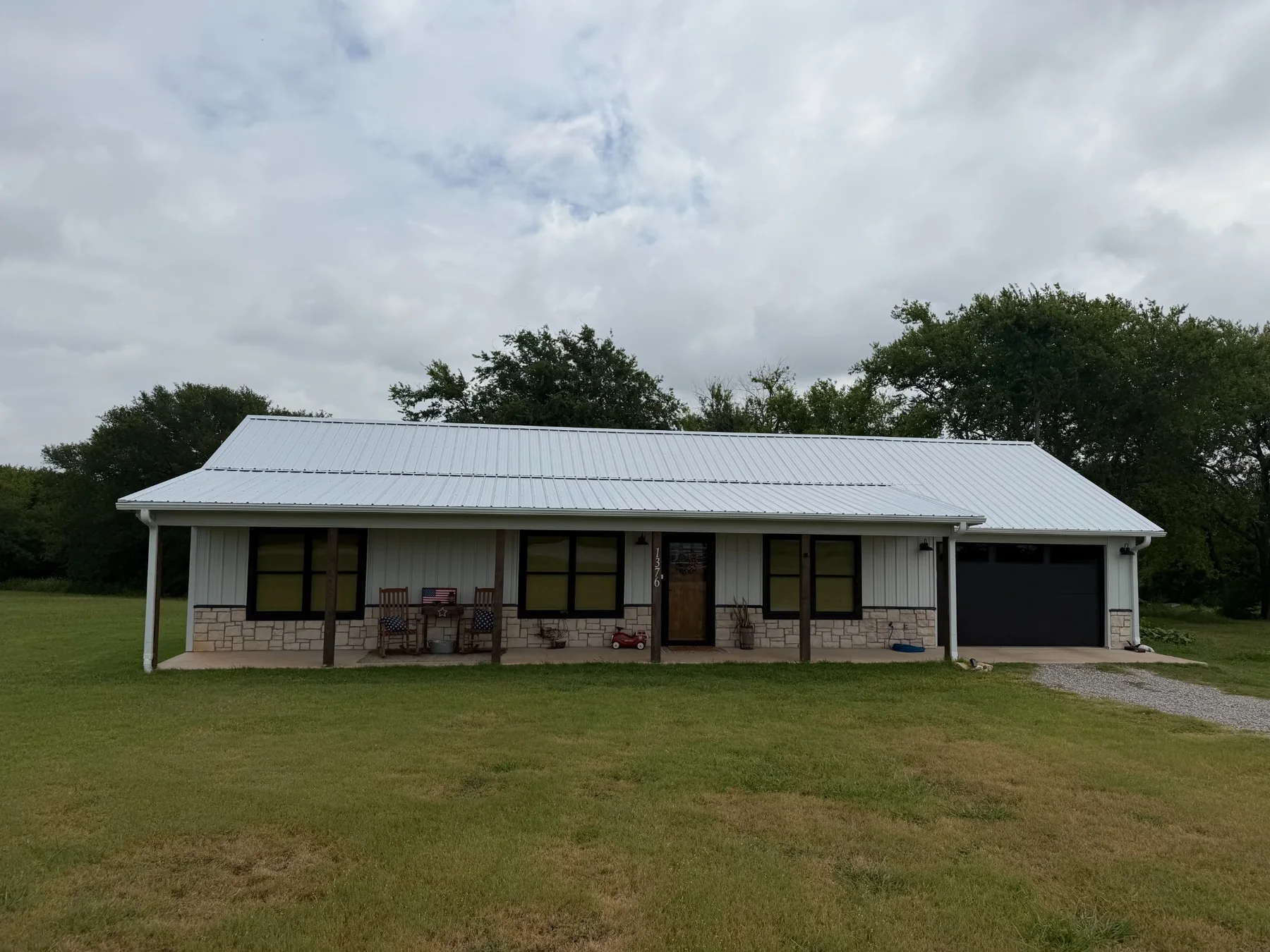
Hail-damaged metal roof replacement
After hail damaged the existing metal roof and exterior items, the restoration included a Central States Panel-Loc Plus Galvalume metal roofing system, seamless gutters, downspouts and new window screens.
View the Tom Bean project →What does a Class 4 impact-resistant shingle mean?
Class 4 is the highest classification in the UL 2218 impact-resistance test. It is a laboratory rating used to compare roofing products under controlled impacts. It does not make a roof hail-proof, and real storm conditions vary.
For homeowners considering a reroof, impact-resistant materials can be worth discussing alongside roof design, wind performance, appearance, budget and insurance requirements. The Texas Department of Insurance notes that some insurers may offer discounts for qualifying wind-, hail- or fire-resistant roofing materials, depending on the company and policy.
Comparing shingle options? Our Class 3 vs. Class 4 shingle guide explains the test difference, policy questions and documented local installations.
Owens Corning TruDefinition Duration Storm in Onyx Black
This new-construction project used a Class 4 impact-resistant shingle system with ABC Pro Guard synthetic underlayment and Rhino Roof Ice & Water protection in the valleys.
See the Lindsay project →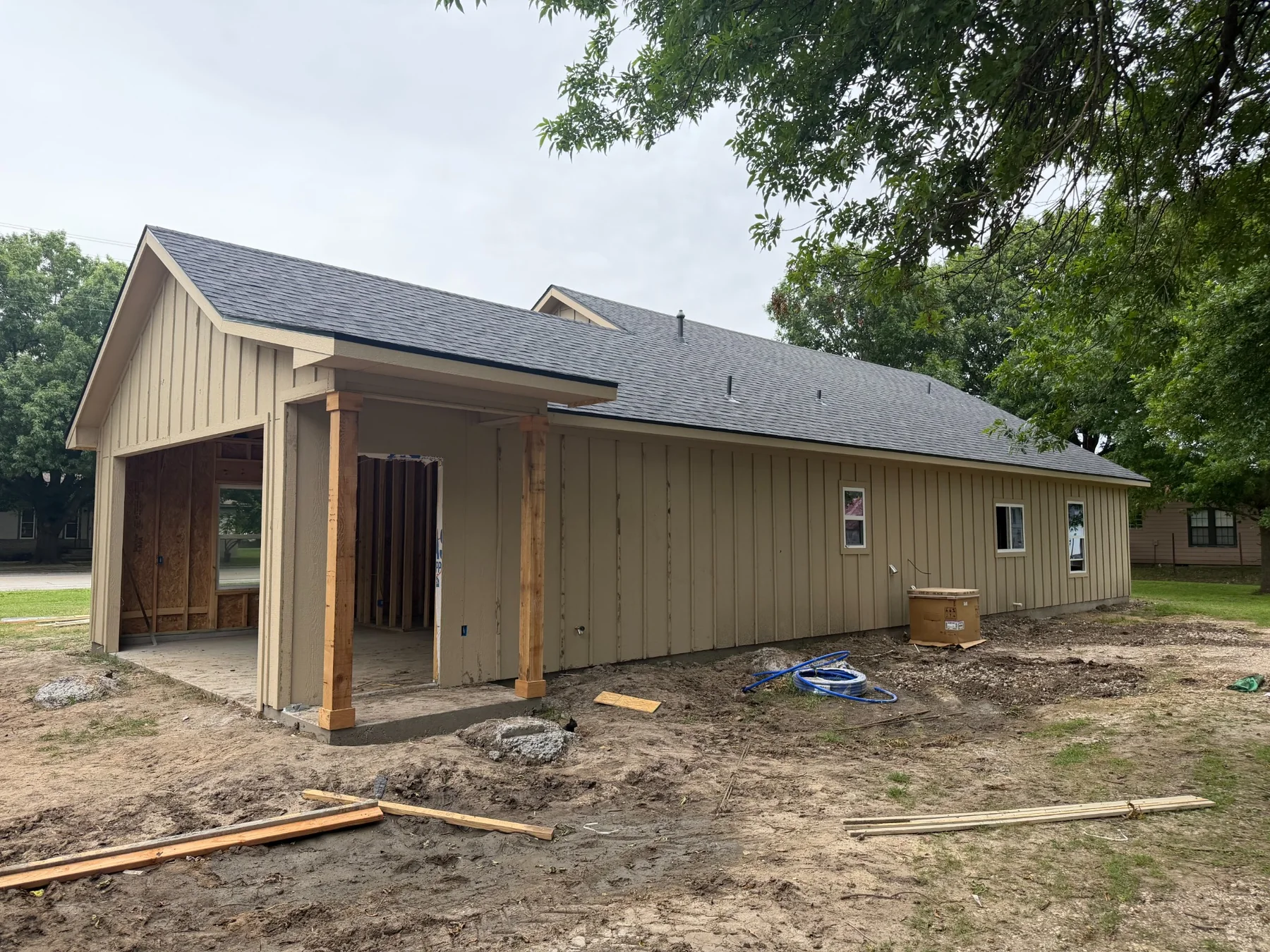
Common North Texas hail-damage questions.
Can hail damage a roof without causing an immediate leak?
Yes. Impact can damage shingles or other roof components before water intrusion is obvious. IBHS research shows that more severe shingle dents and tears can increase water-leakage vulnerability.
Should I call a roofer before filing an insurance claim?
You can start with a roof inspection if you want to understand the visible condition before deciding what to do next. If you file a claim, your insurance carrier decides coverage. The contractor's role is to inspect, document and estimate the roofing work.
How soon should I inspect my roof after hail?
If the storm was significant, there is visible exterior damage, or you have any sign of a leak, schedule an inspection promptly. If water is actively entering the property, call rather than waiting on an online form.
Do dented metal panels automatically need replacement?
No. Denting can be cosmetic, and visible dents alone do not prove the roof has lost function. The inspection should look at the panel system, seams, fasteners, coatings and the rest of the storm scope before deciding what work is needed.
Can impact-resistant shingles still be damaged by hail?
Yes. Impact ratings compare product performance under controlled testing; they are not a guarantee against damage in every storm. Real hail varies in size, hardness, speed and impact angle.
Where the general guidance in this article comes from.
Project-specific details come from American Roofing & Construction's documented jobs. General hail and insurance guidance was cross-checked against the following sources:
Not sure whether the storm damaged your roof?
Start with the condition of the roof. American Roofing & Construction offers free roof inspections across its regular service area, including Sherman, Denison and the greater Texoma region.
Request a Free Inspection