Class 4 passes the higher impact test. It does not mean hail-proof.
Under UL 2218, Class 4 is the highest of four impact-resistance classifications; Class 3 meets a lower test level. That difference is useful when comparing shingles, but neither class guarantees an undamaged roof after a storm or an insurance discount. Check the exact product and policy, not just the number. See the test comparison and limitations.
Choosing a shingle is more specific than choosing a brand or color. For a North Texas homeowner, the next questions are what the rating covers, how the roof will be installed and whether a proposed upgrade fits the budget.
What is the difference between Class 3 and Class 4 shingles?
UL Solutions describes UL 2218 as an impact test that drops steel balls onto roofing materials. The classifications run from Class 1 through Class 4. They describe performance under the specified test conditions, not how many years the roof will last.
GAF provides these Class 3 and Class 4 test dimensions. They are steel-ball measurements—not promises that natural hail of the same size cannot damage your roof.
Does a Class 4 rating mean the shingles cannot suffer hail damage?
No. A laboratory classification is not a guarantee for every storm. UL 2218 evaluates physical breach damage visible from the back of the shingle. UL explains that the test does not account for denting or granule loss in the same way a broader performance assessment can.
IBHS uses laboratory-made hailstones and evaluates dents, tears and granule loss to compare shingle performance. It is a different protocol, not another name for UL 2218. IBHS also states that its protocol is for research and product comparison—not insurance claims handling or a product warranty.
Our recommendation is to review the available IBHS product ratings alongside the manufacturer's documentation. Products sold as impact-resistant do not all perform identically in that testing. After an actual storm, use an inspection and our hail-damage guide rather than assuming the classification settles whether damage occurred.
Are impact ratings, wind ratings and warranties the same thing?
No. Read each specification separately. UL lists different tests for impact, wind resistance and fire performance. A higher impact classification does not, by itself, establish a higher wind rating or a longer product warranty.
Ask for the named shingle, its current technical sheet, installation requirements and applicable warranty. Keep the manufacturer's material coverage separate from the contractor's workmanship coverage. Do not read “Class 4” as a hail-damage warranty; GAF's own Class 4 guidance expressly separates laboratory testing from its warranty terms.
The selected shingles also do not replace a complete roofing scope. Review decking, underlayment, flashing, ventilation and other installation details in the roof replacement proposal.
Will Class 3 or Class 4 shingles lower your insurance premium?
They may qualify for a credit, but savings are not automatic. The Texas Department of Insurance says insurers establish their own accepted test criteria, discount amounts, labeling and documentation requirements.
Before choosing the product, ask your insurer whether that exact model qualifies, what the actual premium difference would be and what paperwork is required. Do not assume Class 3 is excluded, Class 4 receives a universal percentage discount, or one carrier's rules apply to another.
Keep the product information and completed installation documents. A contractor can supply construction information, but the carrier determines whether a policy credit applies. An impact classification also should not be treated as a promise of payment on a future claim.
How should you decide whether the upgrade is worth it?
We recommend comparing two written options for the same roof and scope. Ask the contractor to identify what changes with the upgrade rather than comparing a shingle-only number with a complete reroof price.
- Identify the exact product.Request the manufacturer, product line, color and documented test standard and class. A brand name alone does not establish the rating.
- Keep the installation scope comparable.Check the deck work, underlayment, flashing, ventilation, disposal and cleanup in both proposals. Ask about anything omitted or left in place.
- Separate the price from assumed savings.Compare the actual upgrade cost with any credit your own insurer confirms. Do not budget around an advertised discount that has not been quoted for your policy.
- Review coverage and documentation.Ask what each warranty covers, what it excludes and which product and installation records you will receive when the work is complete.
A higher test classification can be a meaningful product difference, but it is not a substitute for understanding the work. Still deciding whether the roof needs replacement at all? Start with our repair-versus-replacement guide.
What do our Denison and Lindsay projects show?
These project records show two different shingle selections. They are not a side-by-side hail-performance test, and the photographs do not establish an impact rating by themselves.
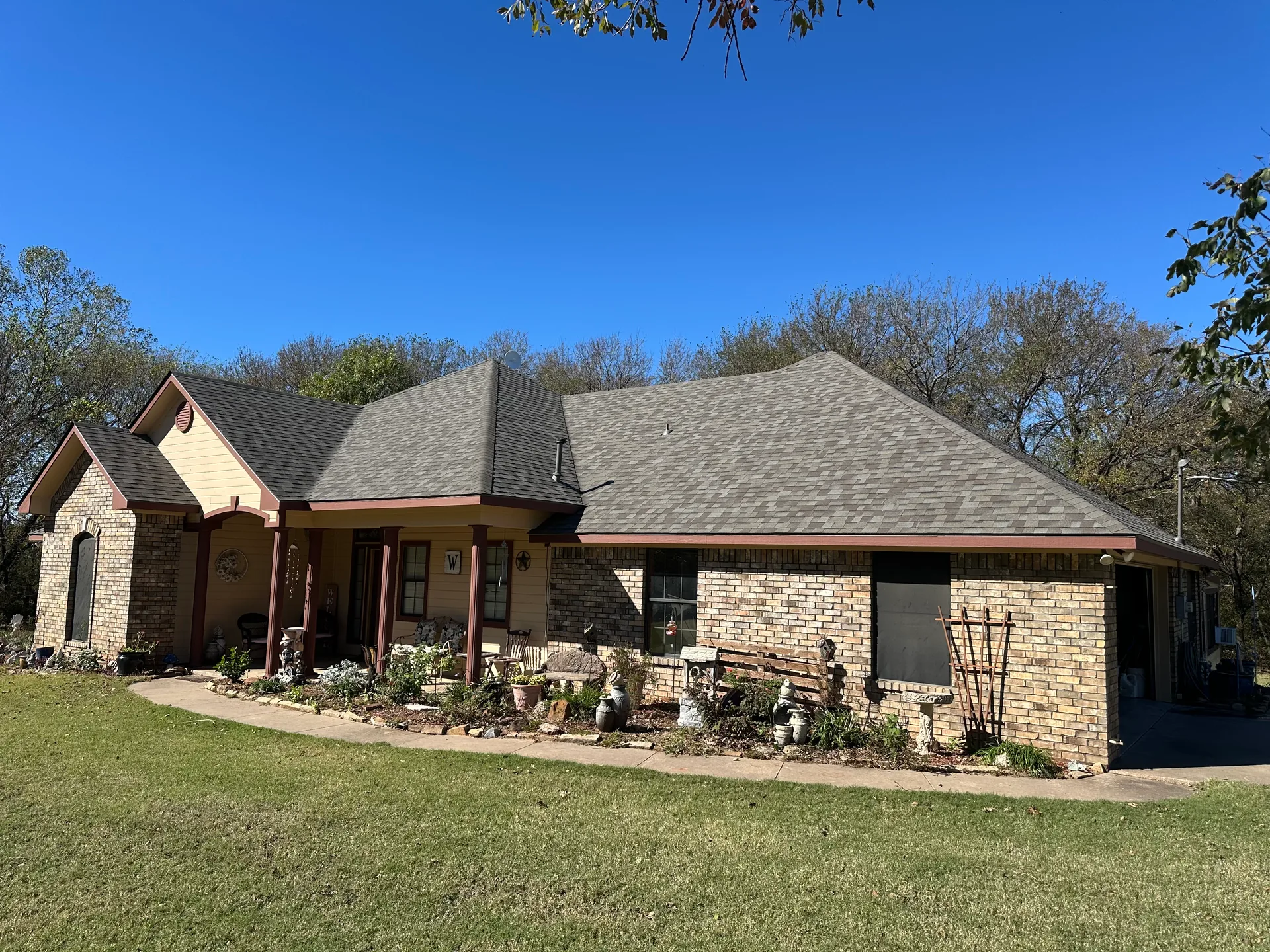
Class 3 Driftwood reroof
The hail-damage insurance job used Owens Corning TruDefinition Duration shingles in Driftwood. New seamless gutters and downspouts were installed after the reroof.
See the Denison project →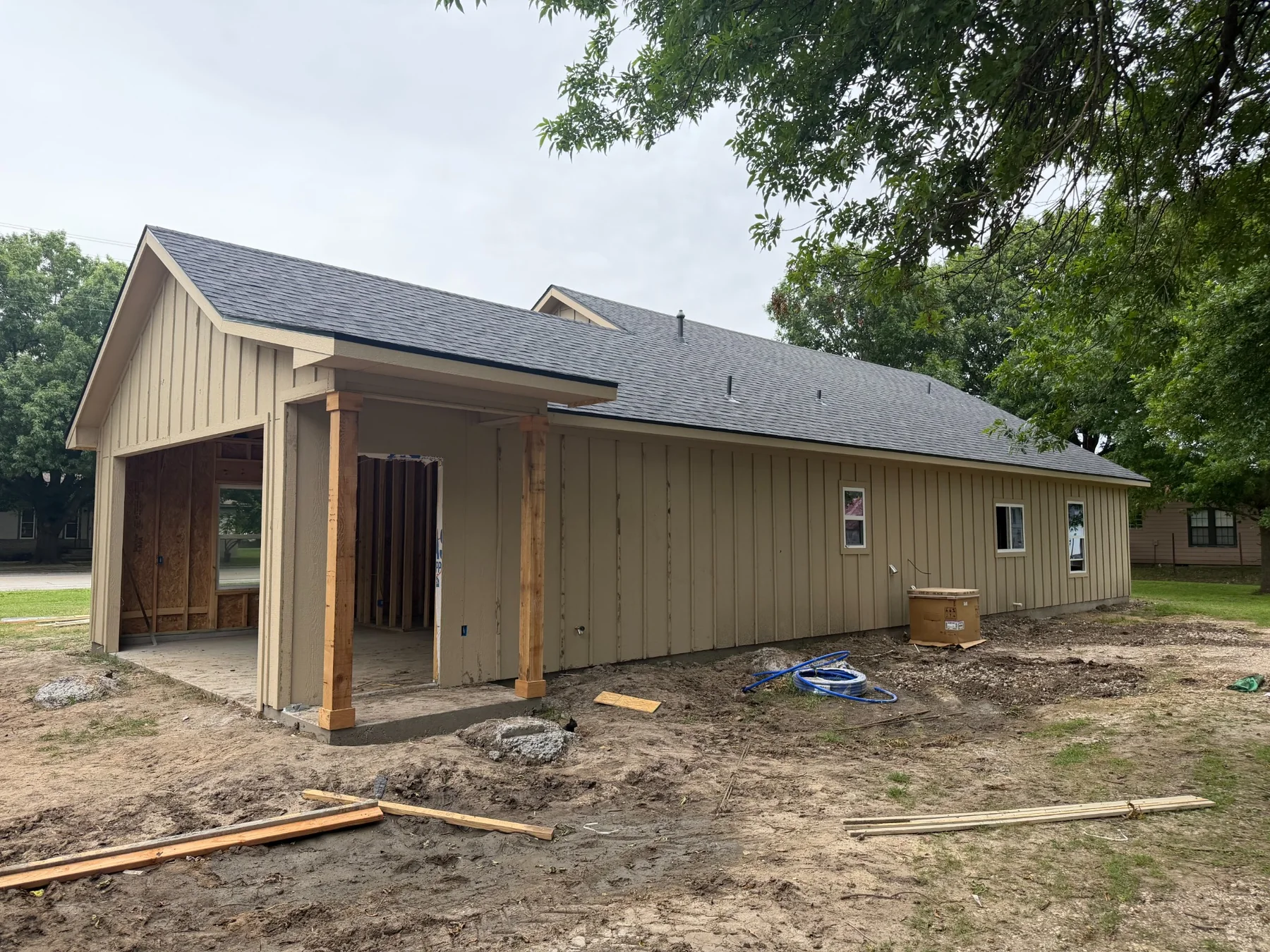
Class 4 new-construction roof
This homeowner selected Owens Corning TruDefinition Duration Storm shingles in Onyx Black. The new-construction project also included synthetic underlayment and valley protection.
See the Lindsay project →The product names, colors and classes above follow the documented jobs. For a new estimate, verify the exact product being supplied and its current classification rather than assuming every similarly named shingle is identical.
Common questions about shingle impact ratings.
How can I confirm the rating on an estimate?
Ask for the exact product's technical documentation and applicable certification or listing. UL describes how its classified products are identified. Do not rely only on color, the brand name or the phrase “impact-resistant.”
Should I replace an otherwise serviceable roof just to get Class 4?
Not automatically. Our recommendation is to assess the existing roof and compare the actual replacement cost and product options first. A higher rating is one part of a material decision, not a diagnosis of the roof you already have.
Does Class 4 mean the roof will last a fixed number of years?
No. The impact classification does not specify a service life. Review the exact product warranty and proposed installation, and ask what ongoing care is recommended rather than converting a class number into a lifespan.
Testing guidance and insurance information.
General explanations draw on the manufacturer, testing and insurance resources below. Local project facts and photographs come from the linked American Roofing & Construction project records. Product availability, warranty terms and insurer requirements should be checked for your own proposal.
Compare the shingles and the work beneath them.
Bring the product names and estimates you are considering. American Roofing & Construction offers free roof inspections across its North Texas and Texoma service area and can explain the roofing scope before you choose materials.
Request a Free Inspection