
Protect people first. Then get the leak assessed.
If water enters during rain, avoid electrical and ceiling hazards, protect belongings only where safe, record what you can and call a roofing professional. Do not climb onto a wet roof or attempt repairs during a storm. A leak needs investigation; it does not automatically mean full replacement.
A stain, a drip or a leak that returns during heavy rain is a reason to arrange an inspection. This guide separates what a homeowner can safely report from the roof access and repair work a professional should handle.
What should you do first when water starts coming in?
The CDC warns against operating electrical equipment while standing in water. Building and Energy's ceiling-safety guidance identifies sagging and cracking as warning signs that need prompt attention.
- Limit damage only where it is safe.Move belongings out of a clear, safe area. A container can catch a drip where there is no electrical or ceiling-collapse concern. Do not walk beneath unstable ceiling material to place it.
- Record what you can without taking risks.Photograph the stain or dripping area from a safe position. Note when it started and whether water is still entering. Do not delay getting help to collect photographs.
- Call and describe the active leak.Tell the roofer about ongoing water entry, ceiling changes and any electrical concern. Ask whether safe temporary protection is possible and when an assessment can take place.
State Farm's roof-leak guidance includes protecting belongings, collecting water, documenting damage and contacting a contractor. Those steps come after safety. During thunder, remain in safe shelter; the National Weather Service advises staying sheltered for at least 30 minutes after the last thunder.
For an active roofing leak, call 903-815-8939 rather than relying on an online request. Emergency roof repair and temporary protection depend on weather, safe access and availability—not a guaranteed arrival time.
Why might a roof leak only when it rains?
Rain can reveal a water-entry problem, but the stain does not identify its cause. GAF lists damaged shingles, deteriorated flashing and blocked gutters among potential sources. Flashing is the material that protects joints and transitions around features such as chimneys and vents.
Roof covering and connections
An inspection may need to examine shingles, flashing and penetrations—not just the patch of roof that appears to be above the drip.
Chimney flashing service →Drainage at the roof edge
Blocked gutters can redirect water beneath roofing. Visible overflow is useful information to report, not proof that the entire gutter system needs replacement.
Roof and gutter guide →GAF notes that the entry point can be away from the visible interior damage. Describe whether the problem occurs in every rain or only certain conditions, but leave the diagnosis to the inspection. A dry ceiling between storms is not confirmation that the entry point has been repaired.
What should a roof-leak inspection help you understand?
Ask for an explanation of the likely source, the evidence and the limits of what could be inspected. Professional assessment is important because visible interior damage may not show the full extent of the roofing problem. GAF explains the role of leak detection and assessment of concealed damage.
Before the visit, share previous repair records, the rooms affected and photographs you already have. Our suggested questions are:
- What finding supports the proposed source of the leak?
- Which nearby roofing, flashing or drainage details were checked?
- Was any area inaccessible, and is further investigation needed?
- What will the repair correct, and what will remain in place?
A visual inspection cannot promise to reveal every hidden condition. Ask how additional findings will be documented and approved before the scope changes. Our roof inspection service explains the assessment process; the decking guide covers damage discovered during tear-off.
Is temporary protection the same as fixing the leak?
No. Temporary protection limits exposure while the permanent work is planned. Ask who will provide it, what area it covers and what happens next. Roof access may need to wait until weather and surface conditions allow safe work. Do not go onto the roof to install a tarp yourself.
Once assessed, a localized problem may be suitable for repair when the remaining roofing is serviceable. More extensive deterioration can change that recommendation. GAF's repair-versus-replacement guidance supports evaluating the damage and surrounding condition rather than choosing solely because there is a leak.
See our roof repair service for the process and the repair-versus-replacement guide for the full comparison. Clarify separately whether drying, insulation, ceiling finishes or electrical work require another qualified professional; do not assume a roofing estimate includes them.
What should you document before approving repairs?
Keep dated photographs, earlier repair records, inspection findings and receipts for temporary work. For storm-related damage, the Texas Department of Insurance recommends documenting the loss, limiting further damage and saving receipts. Contact your insurer promptly about claim requirements and before permanent repairs; arrange safe temporary protection without waiting for a guarantee of coverage.
Get the proposed work and materials in writing. TDI recommends written bids and keeping agreements and warranty terms. Ask the estimate to distinguish temporary protection, permanent repairs, additional discoveries and any interior work. An inspection report is evidence to review, not a promise of insurance payment.
Documentation in a real Whitewright project
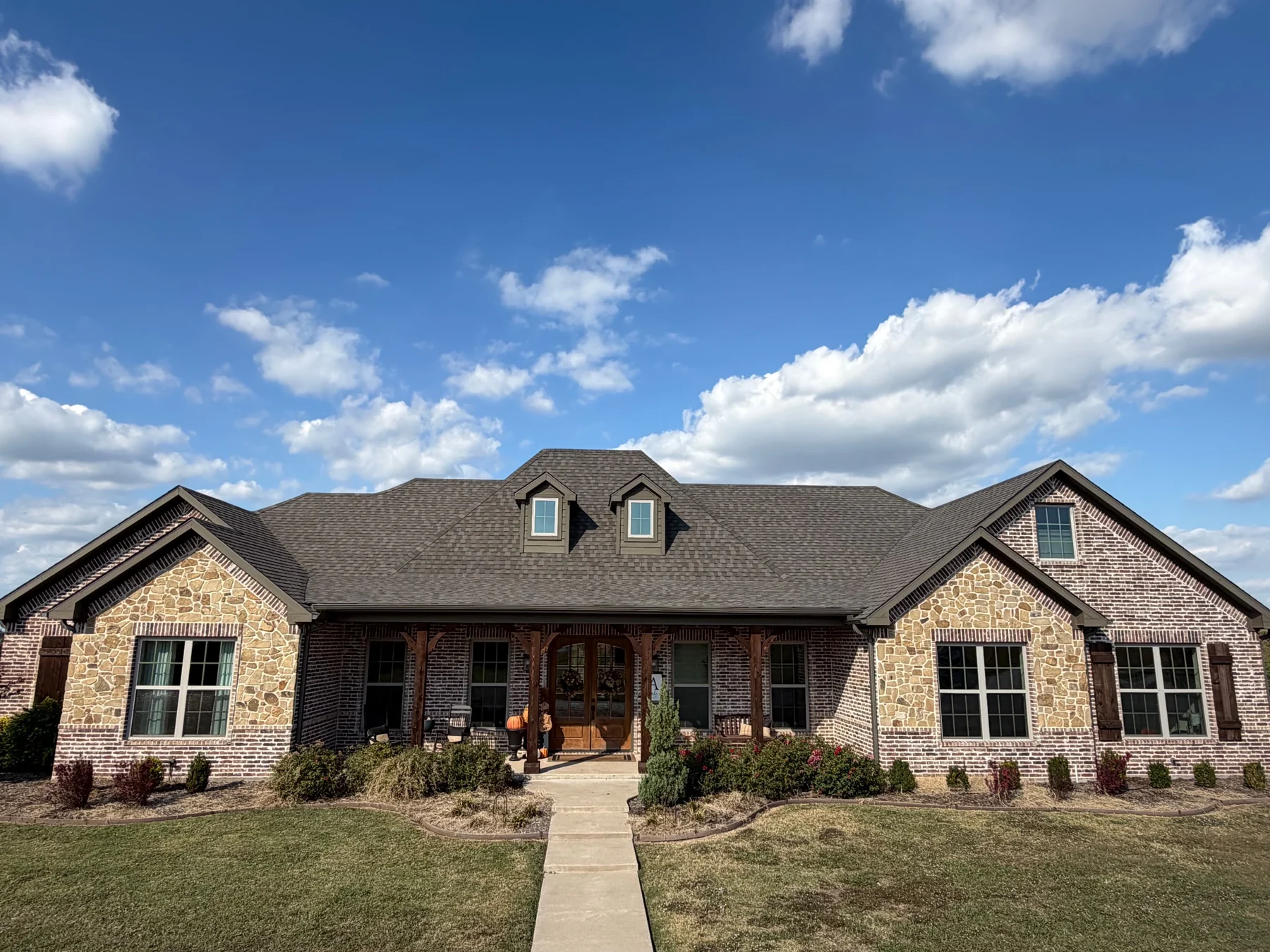
This is a completed hail-damage reroof, not a diagnosed leak-repair case. Its photographs and scope document that property; they do not establish what another roof needs.
Common roof-leak questions.
Can I wait because the dripping stopped?
Arrange an assessment rather than treating the end of the rain as a repair. Tell the contractor when the leak appeared and stopped. A recurring leak or growing stain needs investigation even when the ceiling is currently dry.
Can you tell what needs fixing from my ceiling photograph?
A photograph is useful context, not a complete diagnosis. The entry point may be elsewhere, and the surrounding roofing needs assessment before a permanent repair can be specified.
Does every roof leak require a new roof?
No. A repair may be appropriate for a localized defect in a serviceable roof. Ask what supports the recommended scope and what problems, if any, would remain afterward.
How quickly can American Roofing look at an active leak?
Call 903-815-8939 to describe the urgency and confirm availability. Routine inspection response is usually within 1–2 days, weather permitting; active leaks should be called in directly. No immediate dispatch or same-day repair is promised.
Safety, roofing and documentation resources.
General guidance is drawn from the sources below. The Whitewright example comes from the linked American Roofing project record. The questions are planning prompts, not a remote diagnosis, a coverage decision or instructions for do-it-yourself roof access.
Tell us where and when you noticed the water.
American Roofing & Construction offers free roof inspections and roof repair across its North Texas and Texoma service area. For active water entry, call 903-815-8939 to discuss the situation. Use the form below for a routine inspection request.
Request a Free Inspection